
Create and change user permissions
Kompass is a permission-based platform that provides our customers with the ability to precisely define the access rights for each user. Users can be granted specific permissions, such as viewing, editing or deleting certain data, while access to sensitive information can be restricted. This ensures that the right people have the right level of access to the right information, maintaining security and confidentiality.
Permissions are granted through permission groups. A user gets the access granted by every group they belong to, so you can manage access for many people at once. The steps below show how to create and change permission groups and how to assign them to users.
Creating permission groups
A permission group is a collection of permissions that can be assigned to your users. For example, you might have a permission group with all permissions needed to create, edit and delete equipment. Or another permission group might provide full access to the expenses module.
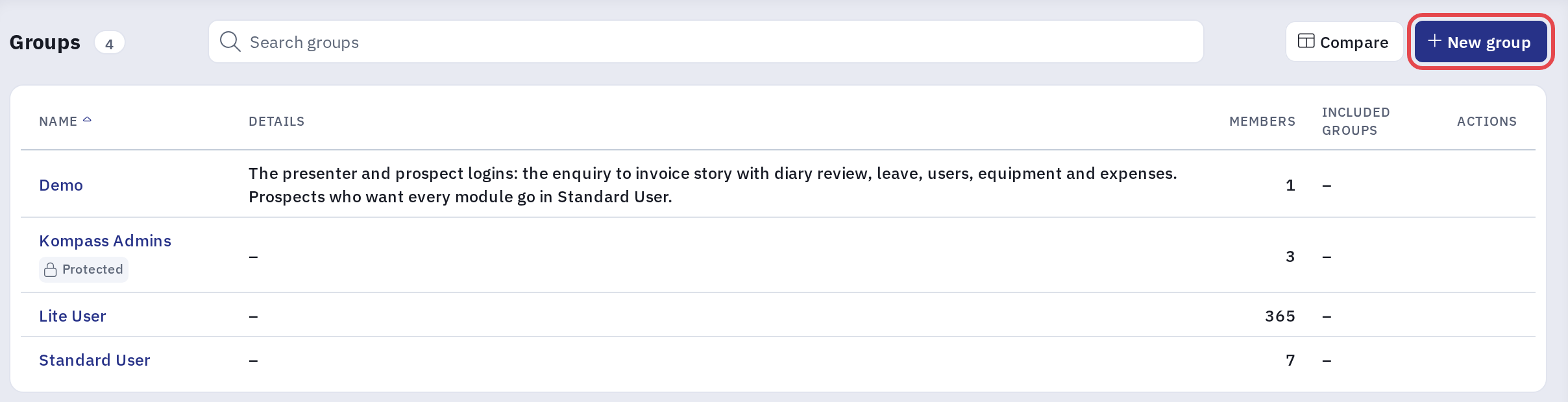
To create a permission group, open Configuration > Groups and click New group. Choose Blank group to start from scratch, or pick a template as a starting point.
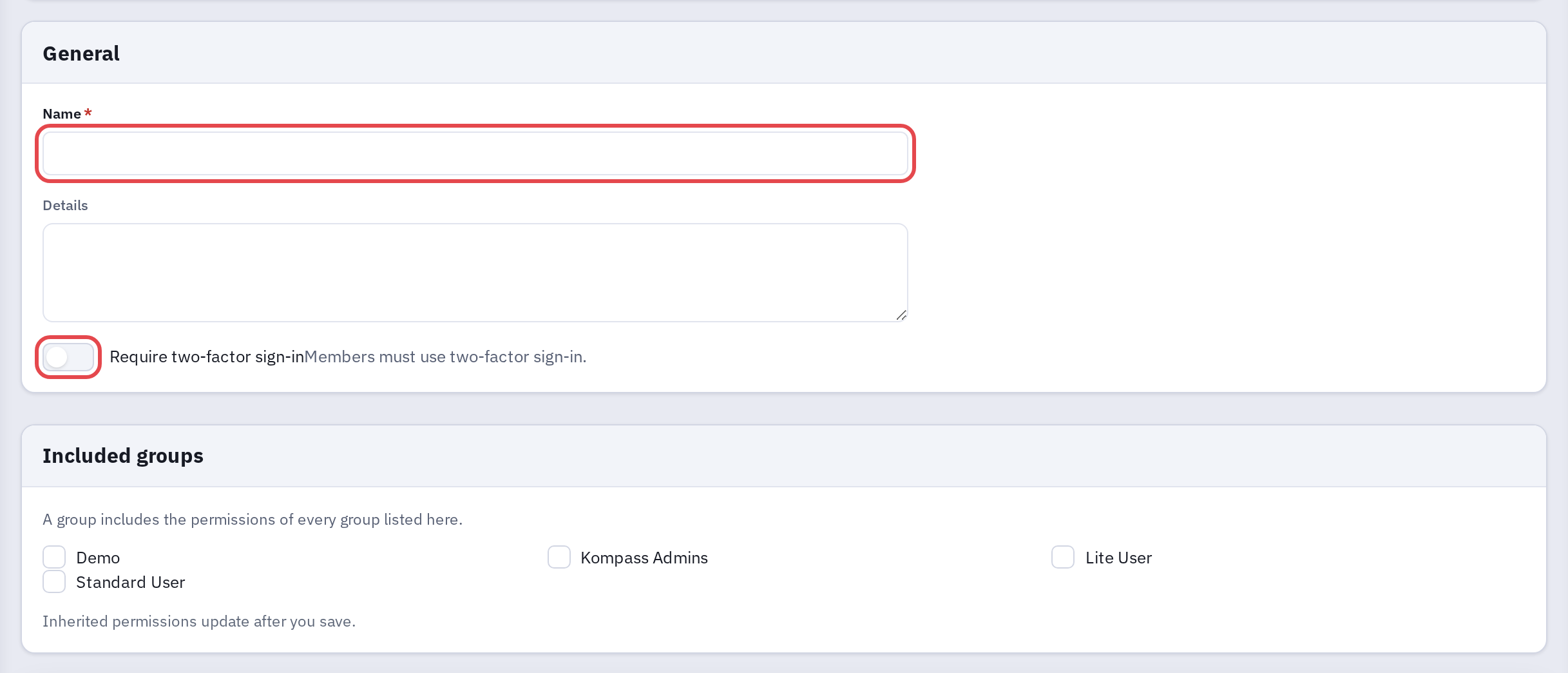
On the new group page, open the Settings tab to set the name and, if you want, a description, included groups and whether members must use two-factor sign-in. Included groups pass their permissions to this group.
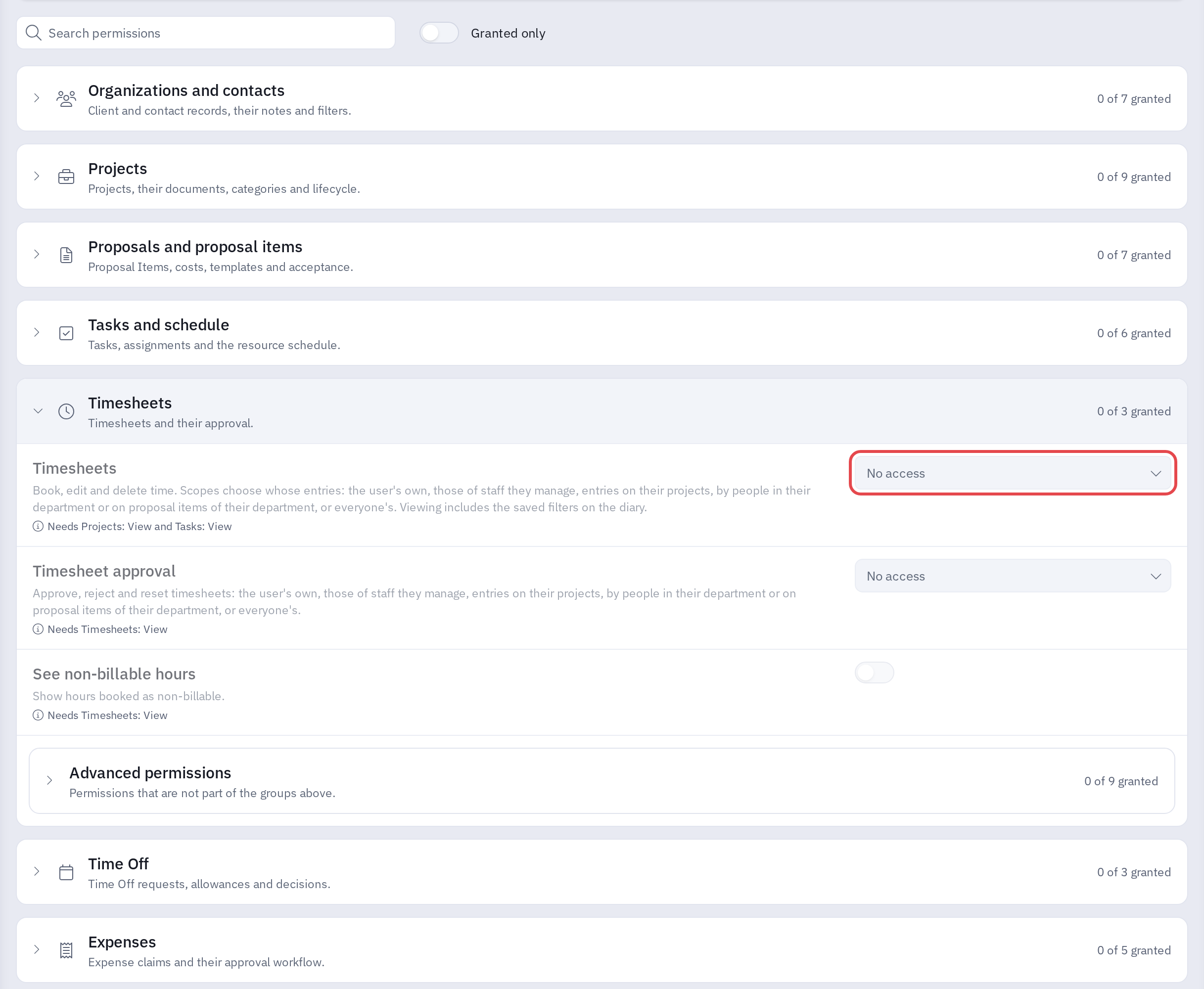
Open the Permissions tab to choose what the group can do. The permissions are grouped into areas such as Projects, Proposals, Timesheets and Users. Each capability has a level chosen from No access, View, Edit, Create, Delete, Export, Approve or Manage, depending on what the capability supports. Where a capability supports it, choose a scope such as All, Own, Own department, Own projects or Own staff. The scope narrows the level to the records the user should reach. Unless you are a superuser, you can only grant permissions you hold yourself; options you cannot grant are unavailable. Set the levels and scopes you need and click Save.
Once the permission group is saved, add its members on the Members tab, or assign it to users from their user page. Just edit the user and select the permission groups you need under Kompass Permission Groups. Changing members requires permission to edit users, and nobody can change their own groups. Without the "Assign any group to users" permission, you can only assign groups you belong to.

Changing permissions of existing permission group
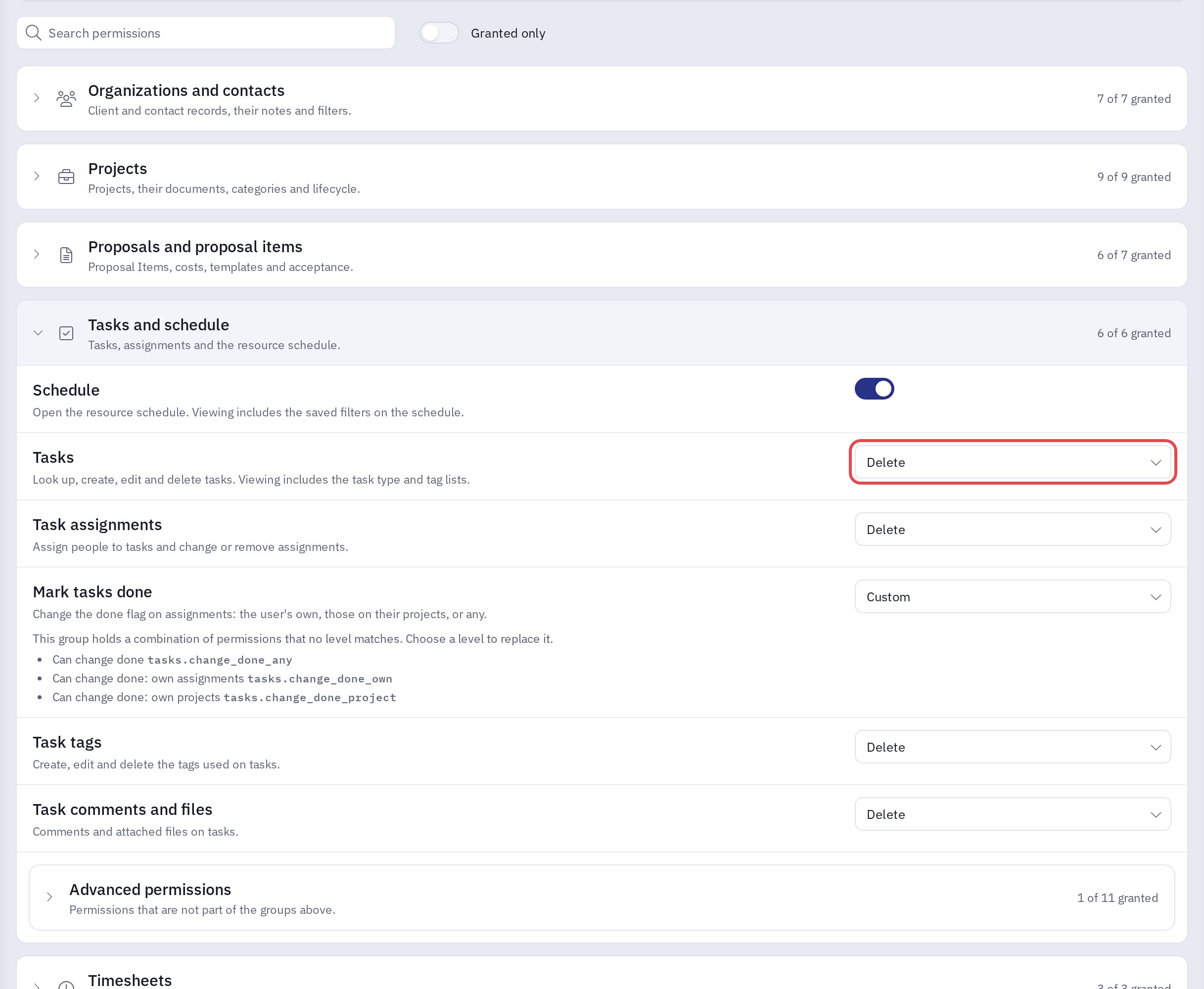
Open Configuration > Groups, select the permission group you want to change and click Edit. On the Permissions tab, change the levels and scopes you need and click Save. Kompass asks you to confirm, because the change applies to every member of the group at once. The groups that control Kompass Admin access are protected and cannot be changed here.
Note that if you want to create a permission group that is similar to an existing one, it would be faster to open the existing permission group and choose Clone. The clone keeps the details, permissions, included groups and sign-in rules, and starts with no members. Change what you need and save the new group.
Types of permissions
Kompass groups individual permissions into areas and capabilities, so you rarely work with the raw permission names. Each capability has a level, and some have scopes. Levels are cumulative: a higher level includes the permissions of the levels below it. Manage gives full control of the capability.
The individual permissions still use the familiar keywords:
| Keywords | Description |
| Can add... | Allows to add the feature you are selecting. Some of them can be only added via the Admin (like departments, services, project categories) while other can be added from the frontend (create a project, a new employee's account, a new equipment etc.) |
| Can change... | As above but that allows editing the existing records. In some occasions you can select what users can edit based on their job role and department. For example, department managers can be able to only edit timesheets of users assigned to their departments. |
| Can delete... | As above. |
| Can export... | These permissions allow users to export datasets like, users' list, projects, project performances etc. |
| Can view... | For any of the permissions above to work, users must also have the "can view" permission selected. |
Where a capability has scopes, the scope decides which records the level applies to. For example, Edit with the Own department scope lets a manager change timesheets of people in their department, while All lets them change everyone's.
Some permissions depend on others. Raising a level may automatically raise a prerequisite, and lowering one may lower the permissions that depend on it. Kompass asks before it lowers anything.
Areas with sensitive or specialist permissions have an Advanced section. It holds permissions such as exports, imports, lookup management and admin-only settings. Most users do not need these.
At first, the number of permissions can seem overwhelming, but the search box and the Granted only filter help you find what you need. However, if you encounter any difficulties with permissions, please feel free to contact us.