
Add time off allowance and other admin fields for new users
When creating a new user in your organization, most details are set on the user's page in Kompass. A few fields are only available in Kompass Admin, and the Time Off allowance is one of them. The fields below cover both the Kompass Admin fields and the user schedule, which is now set on the user's page in Kompass. To edit the Kompass Admin fields, go to the 'Users' section in Kompass Admin and select the user you need to edit.
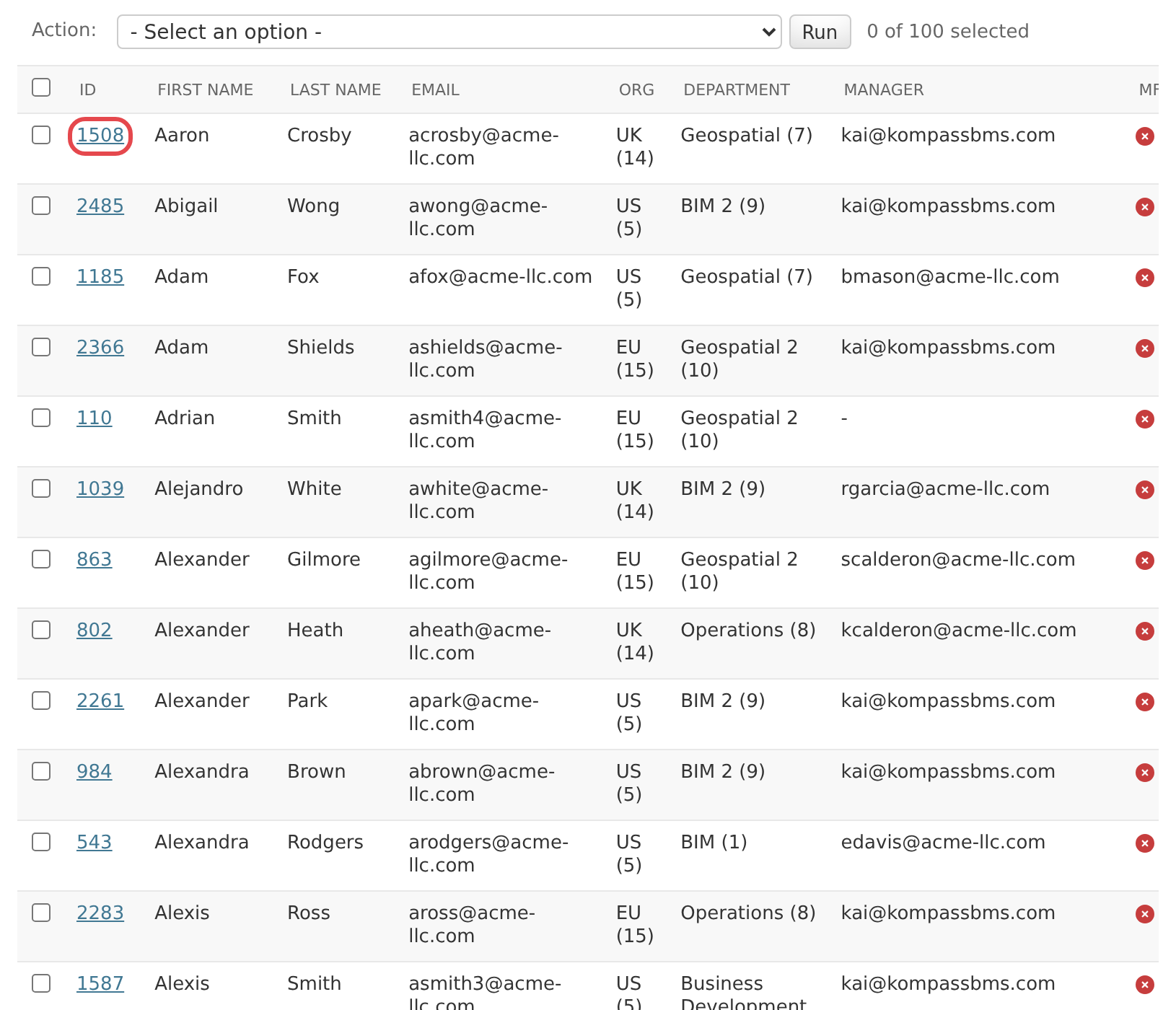
Admin access is no longer a field on the user. It comes from membership of the Kompass Admins group; see the article Create and change user permissions.
- Allowances: This information is important for monitoring employees' time off allowance. They must be added for every new employee and for every employee whose allowance is changed. To add an allowance, scroll to the bottom of the page and click 'Add another Leave Allowances/Accrual'.

A new record will appear where you need to populate the following fields:
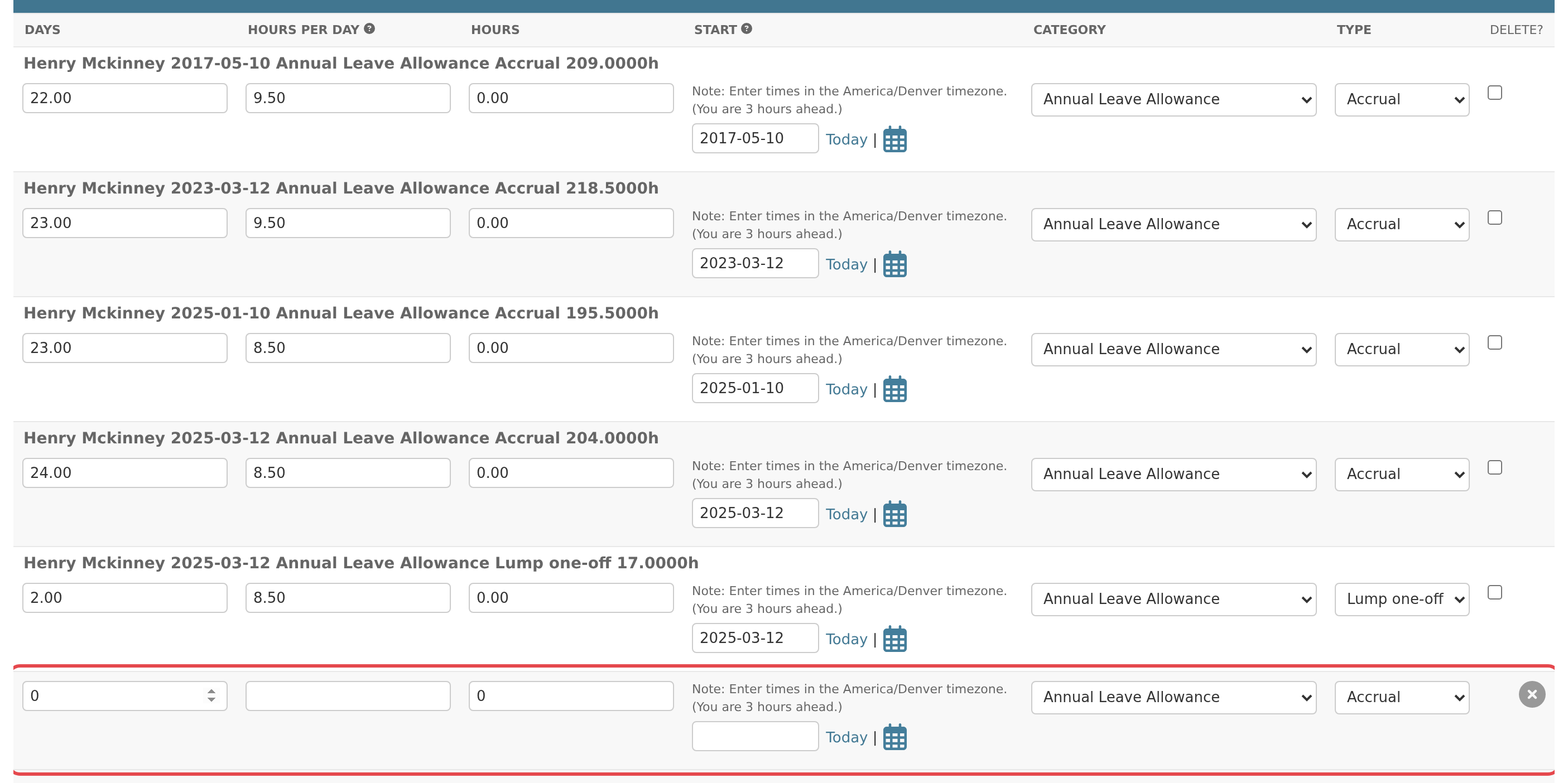
- Days: number of days accrued per year.
- Hours per day: it is used to convert days into hours. Normally you will have to add the number of working hours on a normal working day.
- Hours: number of hours accrued per year.
- Start: the date when the allowance takes effect. For instance, if an employee accrues Time Off 6 months after their start date, set the date 6 months after their start date. If they start accruing from day 1, set their start date.
- Category: currently only "Annual Leave Allowance" is available.
- Type: can be set as "Accrual" if days/hours accrue throughout the year, or "Lump one-off" for one-off allowances like bonuses.
Click "Save" when ready. To add more allowances, click "Save and continue editing".
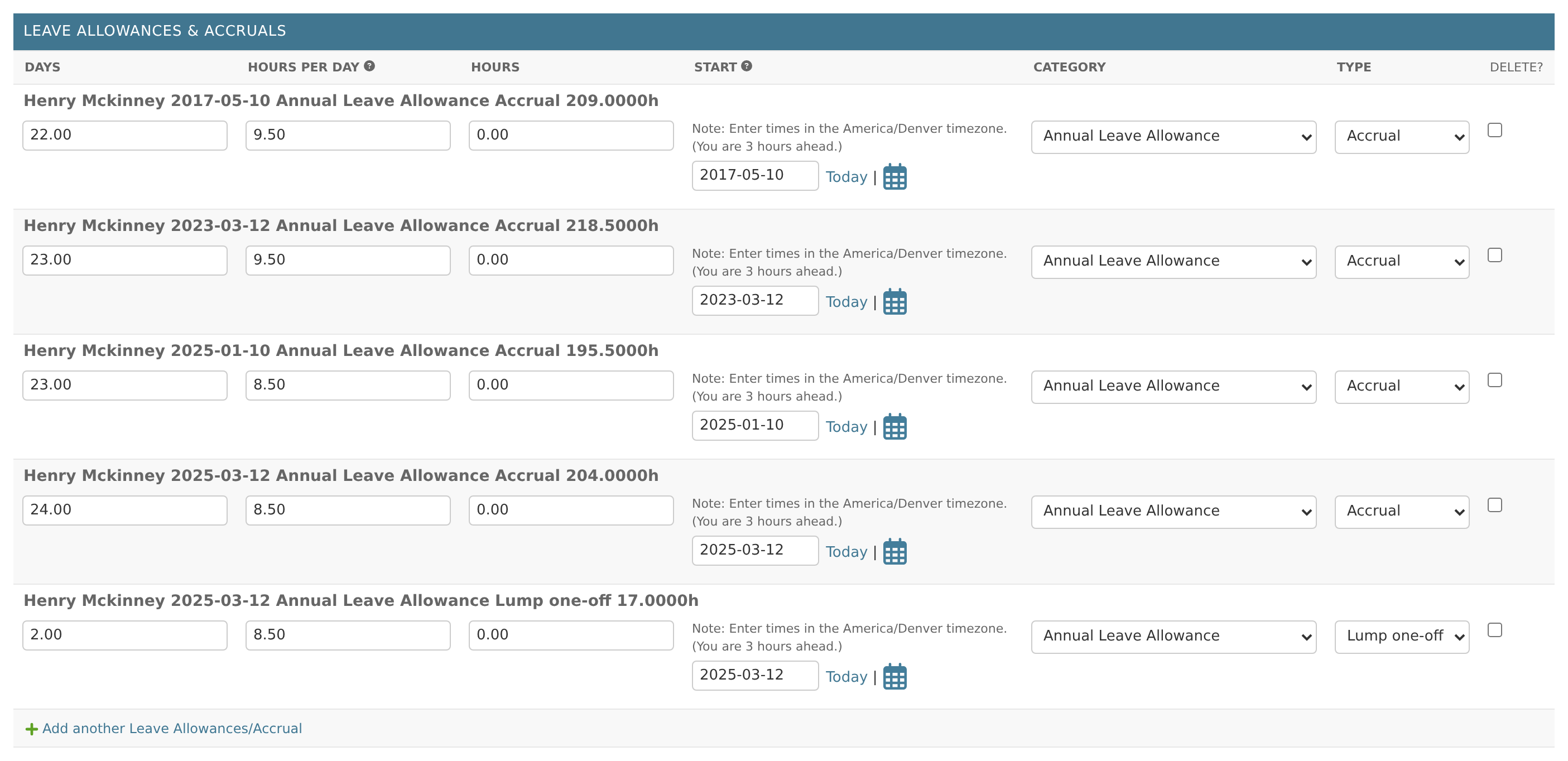
Some companies have multiple allowances for employees. In these cases, all allowances must be added when the employee starts. An example of multiple records added for an employee can be seen below.
-
User Schedules: Each user can have their own schedule. A schedule defines the working days of each employee, whether the user shows as available in the schedule, and other options. Set the user's schedule on their user page in Kompass, in the Role section. Kompass records the change from today (or from the user's start date if that is in the future) and keeps the previous schedule in the user's history.

If you need to set a specific start and end date for a schedule change, use the User Schedules section on the user's page in Kompass Admin instead. Set the end date on the former schedule and a start date on the next day for the new schedule.
You can set different start/end times by day or different working hours for sets of employees. To make it easier to understand the settings of schedules, we will work with an existing sample schedule in the image below.
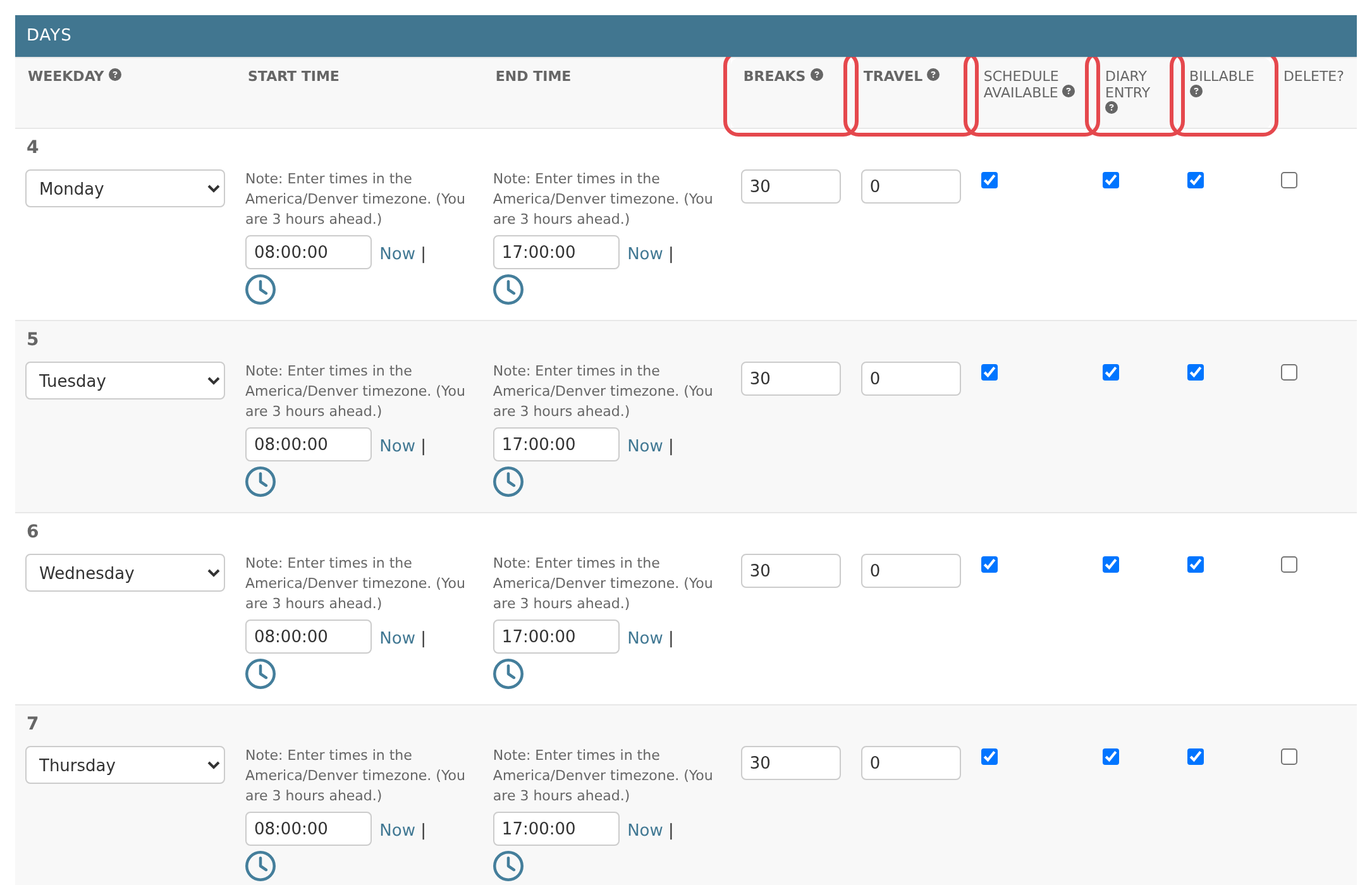
- Set different settings for each day of the week. You can also set options for bank holidays/vacation.
- Define the minutes of break to be pre-filled in the timesheet entries.
- Same as above but for traveling. Note that you can define in the Org's diary configuration in Kompass Admin whether these break and travel minutes will be subtracted or included in the timesheet entries.
- If enabled, the user will show on the schedule as "available".
- If enabled, the user's timesheets will be pre-filled with an empty row for this day to encourage entering an entry.
- If enabled, then the hours will count towards theoretical billable hours of a user on the dashboard. Useful when checking utilization.
- Title: The Title field holds titles of qualifications such as MSc, MBA, MRICS or FIG.

- Home Phone: You also have the option to add a home phone for your employees through Kompass Admin.

- Address line1, Address line2, Address town, Address state, Address postal code, Address country, Location: Finally, there are options for setting employees' addresses and their contractual work location. If not set, the Org's location will be used. This is useful for organizations who might want to calculate the distance between employees' addresses and offices. These details are included in the user JSON export.